
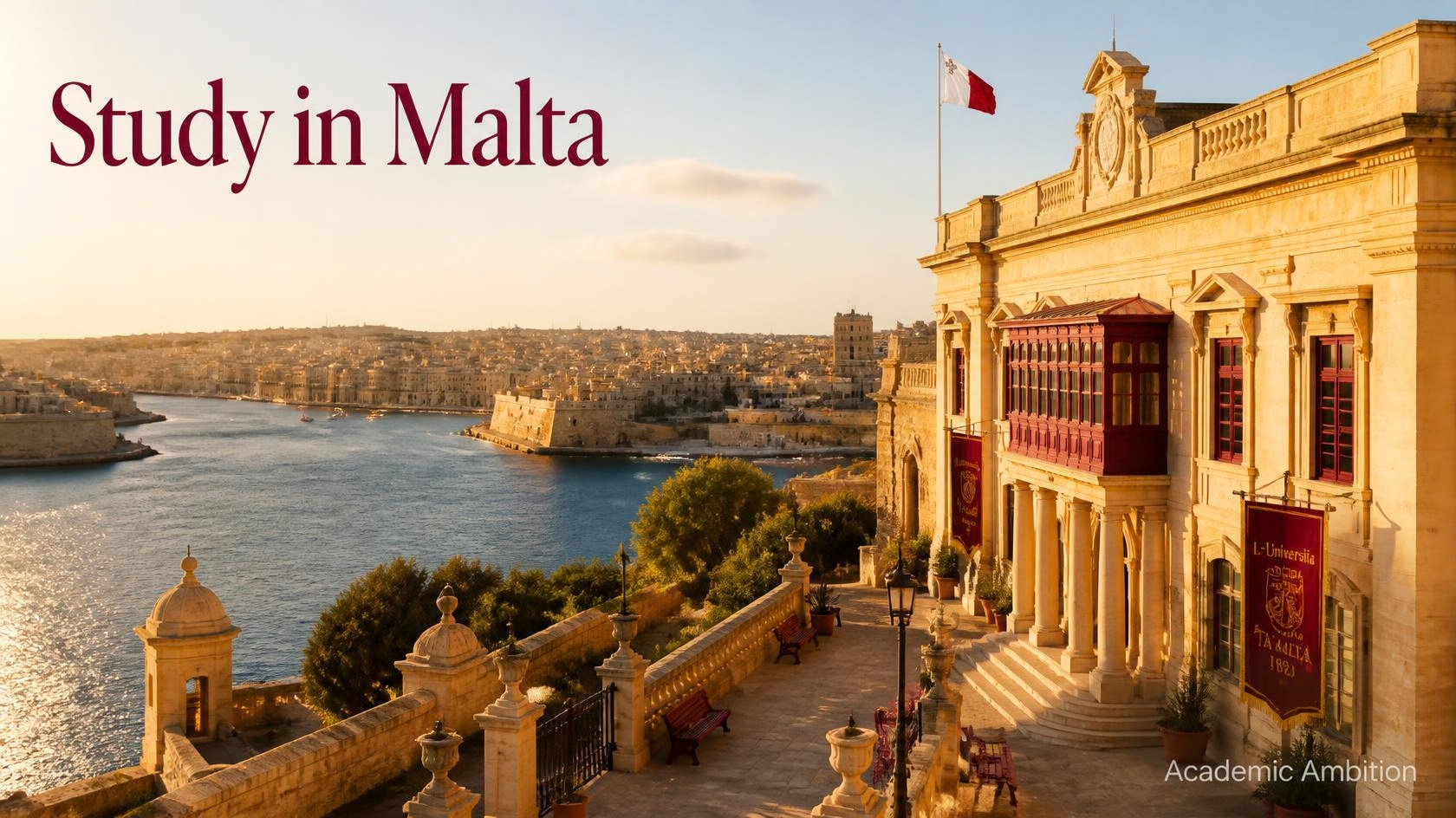
Complete Guide to Studying in Malta from Nepal (EU Degrees & Schengen Access)
As an official English-speaking member of the European Union, Malta offers Nepalese students a strategic pathway to earn a globally recognized degree inside the Schengen Zone.
With a booming economy driven by hospitality, IT, finance, and international business, Malta provides top quality academic programs paired with part-time work opportunities.
Malta at a Glance
Parameter | Details for Nepali Applicants |
Main Intakes | October / November & February / March (Private colleges offer rolling intakes) |
Popular Courses | Hospitality & Tourism, IT / Computing, Business Administration, Healthcare |
Tuition Range (Diploma / Bachelor) | €5,000 – €7,500 / year (~NPR 7.3 – 11 Lakhs) |
Tuition Range (Master's / MBA) | €6,500 – €9,500 / year (~NPR 9.5 – 13.8 Lakhs) |
English Language Requirement | IELTS 5.5–6.0, PTE 45+, or MOI Letter (Select Institutions) |
Part-Time Work Allowance | 20 Hours / Week (after initial 90 days via Employment License) |
Monthly Living Expenses | €500 – €700 / month (~NPR 73k – 102k) |
Visa Type | National Type-D Visa leading to e-Residence Permit |
Key Benefits of Studying in Malta
1. English is an Official Language
Unlike non-English European countries, Malta conducts all official administrative, academic, and business affairs in English, making daily integration simple for Nepalese students.
2. Schengen Mobility
Your Maltese student residence permit (e-Residence Card) grants you visa-free travel privileges across all 29 Schengen countries throughout your studies.
3. Career & Post-Study Pathways
Students can work up to 20 hours per week during term time. Following graduation, students can access post-study work permits tailored to high-demand sectors like tourism, tech, and financial services.
Malta Student Visa Process
Step 1: College Offer & Initial Deposit
   └── Apply with academic documents (+2 GPA 2.4+ / Bachelor's 2.2+) and obtain your Acceptance Letter.

Step 2: Document Legalization & Sponsorship
   └── Prepare bank statements demonstrating sufficient funds (€25–€30/day of stay) plus tuition receipts.

Step 3: Submit National Type-D Visa
   └── Apply through the designated visa application center/embassy with confirmed student accommodation.

Step 4: Arrival & e-Residence Card Registration
   └── Arrive in Malta and apply for your Identità e-Residence Card within 90 days.


